
Reverse Solutions
Reverse Mortgage Resources
Plain-English articles and FAQs about staying home, costs, heirs, and next steps.
What’s your next step?
Most people who call us aren’t “shopping for a mortgage.” They have questions. Pick the one that sounds like yours.
Learn the basics
Most of what you’ve heard is outdated
Plain-language answers — what a reverse mortgage is, what it isn’t, and the protections built into the federally insured version.
Start here →See who qualifies
We’ll tell you honestly if it’s not a fit
Generally: age 62 or older, the home is your primary residence, and you’ve built meaningful equity. Three checks — that’s usually it.
Check fit →Talk to a person
A named specialist — not a call center
Bring your questions, your worries, even your skepticism. You’ll work with Toby, Andy, or Mark — each with a published NMLS license.
Meet the team →Start here
Browse all themes
Does the bank take my house with a reverse mortgage?
You keep the title while you live there and meet the loan’s responsibilities. Here’s what that actually means.

Will my kids inherit debt from a reverse mortgage?
Under common program rules, heirs are not asked to pay a shortage out of pocket.

Can I stay in my home for good with a reverse mortgage?
These loans are built so you can age in place. The loan comes due when life changes.

Are reverse mortgages a scam, or only for people in trouble?
Distrust is understandable. Many homeowners use it as a planned retirement tool.
Explore by theme
Ownership & staying home
Keep the title, stay home, clear the stigma.
Does the bank take my house with a reverse mortgage?
You keep the title while you live there and meet the loan’s responsibilities.
Can I stay in my home for good with a reverse mortgage?
Built so you can age in place. The loan comes due when life changes.
Are reverse mortgages a scam, or only for people in trouble?
Distrust is understandable. Counseling and protections are part of today’s common path.
Reverse mortgage basics
What it is, how money comes, who it may fit, and how long it takes.
What is a reverse mortgage? (plain English)
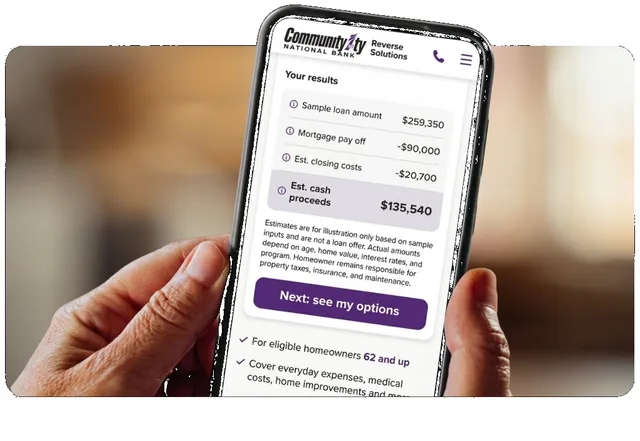
Turn part of the equity you built into flexible cash while you keep living in your home.
How does the money come to me?
Lump sum, monthly payments, a line of credit, or a mix. Menus vary by program.
Who qualifies for a reverse mortgage?
Built for older homeowners with meaningful equity. Don’t rule yourself out from a webpage.
Do I need perfect credit for a reverse mortgage?
Credit is reviewed differently. The bigger question is keeping up with taxes and insurance.
How long does a reverse mortgage take? Simple steps
Conversation, counseling, application, closing. Timelines vary; nobody should rush you.
Money & costs
Fees, property charges, cash flow, and paying off a current mortgage.
What does a reverse mortgage cost - in plain terms?
There are real costs. Many can be financed into the loan. You’ll see an itemized picture first.
What about taxes, insurance, and upkeep?
No required monthly mortgage payment does not mean zero housing costs.
Using home equity for retirement cash flow
If Social Security and savings don’t stretch, equity can help fund monthly stability.
Paying off your current mortgage with a reverse
You don’t always need a free-and-clear home. Many use proceeds to pay off an existing mortgage.
Family, heirs & care
Kids, adult children, and funding help at home.
Will my kids inherit debt from a reverse mortgage?
Under common program rules, heirs are not asked to pay a shortage out of pocket.
A guide for adult children: talking about home equity without pressure
You want Mom or Dad safe, and you refuse to push. Here’s how to start a calm conversation.
Home care and staying home longer
Equity you’ve built may help fund in-home care when income can’t.
Comparing your choices
Other tools, loan paths, and who to talk to.
HEI vs reverse: why the “easy cash” pitch can hurt
Term clocks, lost appreciation, and leftover mortgage payments — why a reverse is often clearer for staying home.
Reverse vs HELOC vs selling / downsizing
Same home equity. Different tools. The right one depends on whether you want to stay.
HECM vs jumbo: which path fits a higher-value home?
Some homes open more than one reverse path. Light comparison, then a personal review.
Why Reverse Solutions?
Bank-backed trust, named specialists, and education-first guidance — not a call-center pitch.
Why talk to a bank-backed reverse mortgage specialist?
Most people don’t fear the product as much as they fear the pitch.
Still have questions?
Talk with a specialist. No pressure. We’ll help you see whether this tool fits your home and goals.
Common questions
Short answers by topic. View the full FAQ page →
Ownership / home
Must the home be paid off? +
No. You do not always need the home free and clear. On many reverse mortgages, an existing mortgage or other lien is paid off at closing when there is enough equity. That payoff is often a main reason people explore the product — it can remove a required monthly mortgage payment and free cash flow. How much equity remains depends on your home value, rates, age rules for the program, and costs. A specialist can map whether payoff-plus-proceeds is realistic for your situation.
What if a spouse isn’t on the loan? +
It depends on the program and whether the spouse meets eligibility rules. On many FHA-insured reverse mortgages (HECMs), protections for an eligible non-borrowing spouse may apply when requirements are met. Proprietary (non-FHA) loans can work differently. Ask specifically about co-borrower vs non-borrowing spouse rules for the loan path you’d use — this is one of the most important topics to review with a specialist before anyone decides.
Money / benefits
Are proceeds taxable? +
Loan advances from a reverse mortgage are generally not treated as taxable income — but tax rules can depend on your full situation, and this is not tax advice. Confirm with a qualified tax professional before you make decisions. Reverse Solutions specialists can explain the loan mechanics; they should not replace your tax advisor.
Social Security & Medicare +
For many homeowners, Social Security and Medicare are generally not reduced simply because you take reverse mortgage proceeds — but this is not benefits advice. Means-tested programs (such as Medicaid or SSI in many cases) can treat assets and cash differently. Before you change your cash position, talk with a benefits counselor or other qualified professional who knows your programs.
Heirs
How do heirs keep or sell the home? +
When a reverse mortgage comes due, heirs typically choose among selling, keeping, or not keeping the home — exact steps depend on the loan and servicer. Under common non-recourse rules they are generally not asked to cover a shortage out of pocket. For a fuller walkthrough, see Will my kids inherit debt from a reverse mortgage?
Process
What if I need to move or sell later? +
You can sell. The loan is typically paid from the sale proceeds. If the home sells for more than the balance (and applicable costs), remaining equity is yours. If you move out permanently — for example, to assisted living — that can be a maturity event under program rules. Plans to move soon often make a reverse a weaker fit because costs may not pencil.
Counseling: what to expect +
On the common FHA-insured path (HECM), you complete counseling with a HUD-approved agency that is independent from the lender. Sessions are often by phone or video; you’ll discuss how the loan works, costs, obligations, repayment triggers, and alternatives. You’ll receive a certificate needed to move forward on that path. Treat it as protection and a second set of plain-language eyes.